Where should a Vermont small business start with AI? Start with three pieces of work, in this order: a plain-language policy that says which tools staff can use and with what data, a review of the AI tools and add-ons already in use, and a 90-day roadmap that puts a few AI priorities on the same plan as your infrastructure and security. Do those three, and AI helps your people instead of creating risks nobody is watching.
Key Takeaways
- AI can take hours of routine work off your team, but only when someone sets the rules for tools, data, and review.
- A short AI policy comes first. It tells staff what is allowed before they guess.
- Most organizations already use more AI than they think. A tool and vendor review finds it and decides what stays.
- A 90-day AI roadmap turns good intentions into a few funded, staffed steps.
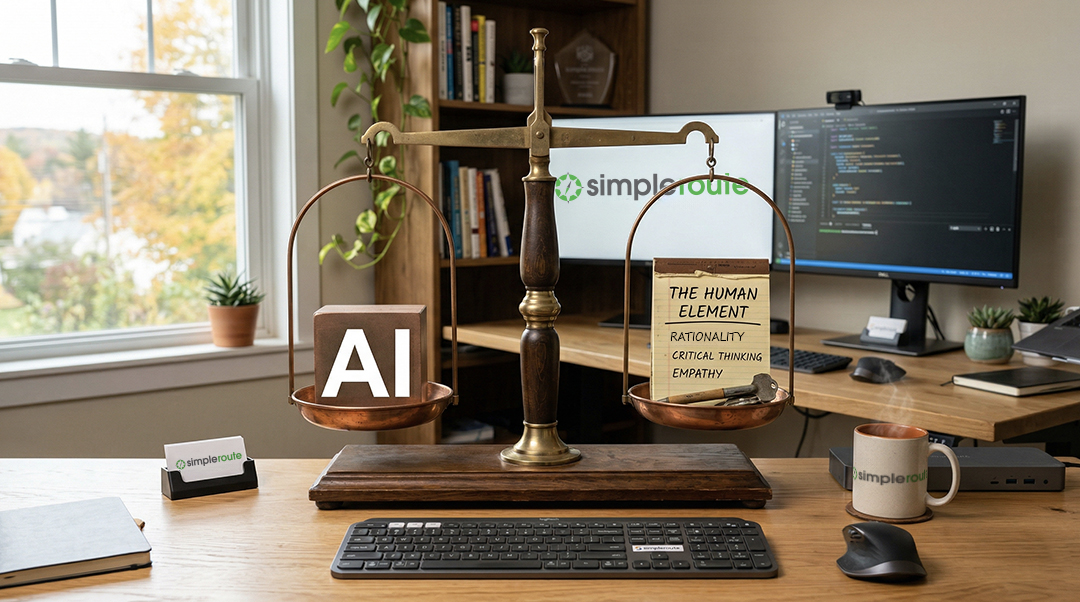
- People stay accountable. AI supports judgment. It does not replace it.
Why AI Needs a Plan
AI has moved from a buzzword to a daily tool for Vermont businesses. It drafts emails, summarizes reports, and finds patterns in data in seconds. It is also easy to adopt without anyone deciding how it should be used.
Where AI Helps
- Routine work. Data entry, routine reporting, and invoice processing can take far less staff time, so your team spends more of the day on work that needs a person.
- Patterns people miss. AI can spot trends in customer behavior, cash flow, or inventory, which can mean better forecasts and fewer surprises at quarter end.
- Handling more with the team you have. Good tools help your current staff keep up as demand grows. The goal is helping your people, not cutting them.
Where AI Goes Wrong
- Confident wrong answers. AI can sound sure of itself and still be wrong. Using it for legal, financial, or technical decisions without a human review invites costly errors.
- Data going where it should not. Pasting client records or internal numbers into a public tool can expose information you are responsible for. Our post on shadow AI risks covers how that happens.
- Losing the human touch. Over-automation makes customer conversations feel cold. In a region where people know each other, real relationships still matter.
Start With a Policy
A policy is the cheapest and fastest step, and it makes every later decision easier. It does not need to be long. It needs to be plain enough for staff to follow and specific enough for leadership to govern. A useful AI policy and acceptable use guide answers the questions that slow people down:
- Which AI tools are approved, and for what kinds of work.
- What data can never go into an AI tool, such as client records, patient information, or financial details.
- When a person has to review AI output before it goes out the door.
- Who approves exceptions, and who staff can ask when they are not sure.
If you work in a regulated field such as medical or finance, write the policy around the rules you already follow. We work alongside you so AI use fits those obligations instead of working around them.
Pick Tools You Can Govern
Most AI shows up on its own. A staff member signs up for a free tool, or a program you already pay for adds an AI feature that someone switches on. Before you buy anything new, find out what is already in use. A tool and vendor review inventories those tools, checks where the data travels, and reads the vendor terms before a tool becomes the default.
For any AI tool, new or already in place, ask three questions:
- Where does the data go? Business-grade tools with clear data handling terms are usually a better fit than free consumer versions. Convenient is not the same as safe.
- Who checks the output? Require a human review for anything high-stakes. AI drafts. A person decides.
- Does it solve a real problem? Technology should serve your business goals. If no one can name the problem a tool solves, it probably does not need to stay.
Build a 90-Day Roadmap
A roadmap keeps AI from becoming a pile of experiments. The point is not to buy everything. It is to fund and staff the right first steps, then review them as the business changes. Put AI on the same IT roadmap as infrastructure, security, and support so the decisions stay connected.
Days 1 to 30: Rules and Inventory
Publish the policy, tell staff what is approved, and list every AI tool and feature in use today. Decide what stays, what goes, and what needs a closer look.
Days 31 to 60: One or Two Pilots
Pick one or two tasks where AI could save real time, such as drafting routine documents or summarizing meeting notes. Run them with approved tools, a named owner, and a human review step. Track the time saved and the problems found.
Days 61 to 90: Review and Decide
Look at what the pilots showed. Keep what worked, drop what did not, and update the policy with what you learned. Then set the next few priorities, with a budget and an owner for each.
Where simpleroute Helps
Our AI governance work covers all three steps: the policy, the tool review, and the roadmap. It is the first part of our AI services, and it comes before we help deploy any approved tools in your environment. Because we also provide managed IT, the same people who know your systems help you make AI decisions.
We use AI to make our own staff faster. We do not use it to stand between you and help, and we do not sell it as a way to cut your people. When you call, a person answers.
Frequently Asked Questions
Where should a small business start with AI?
Start with a short policy that names approved tools and the data staff should never put into them. Then review the AI tools already in use, and build a 90-day plan with one or two pilots.
Do we need an AI policy if only a few people use AI?
Yes. A few people using free tools with client data is exactly when a policy helps most. One or two pages is often enough to start.
Is free AI safe to use for work?
It depends on the tool and the data. Many free tools have terms that allow the vendor to keep or learn from what you enter. Keep sensitive data out of free tools, and use business versions with clear data terms for real work.
Will AI replace our staff?
That is not how we approach it. We help you use AI to take routine work off your team so people can spend more time on judgment, service, and customers.
Talk to a Person at simpleroute
If you are not sure where your business stands with AI, we can help you sort it out. Call 802-881-0092 and a person answers, or use our contact form. We will talk through what you use today and what we would do first.